03 July 2009

Staycation Research #1: Enlightment

Yes, the economy is changing our research. Libraries, archives, and courthouses are not open as many hours. Some knowledgeable staff members are no longer employed. We are not doing as much distance travel for research purposes. At the end of this summer I am traveling to Little Rock for the 2009 Federation of Genealogical Societies Conference. I don't want to miss that. On my way there and back I will be combining that and some on-site research in several localities. That is my big trip of the summer.

Most of the other summer and fall research time is being spent near home in what many have termed "staycations." I have already spent time at my nearby county branch library in the reference and history sections. What else can we do this summer and fall to stay nearer to home and save for the major trips?
  • Catch up on your reading. What historical and genealogical books sit on your shelves that you could pick up and actually read from cover to cover?
  • Have some relatives that are hesitant to share with you? How about just sending them a newsy letter or email telling them about what you have found on the past generations. Let them know what your branch of the family is up to. Ask them how their garden is doing or how the grandchildren are doing. Make it light and don't ask them for a single thing. This could also be called "buttering them up" for the requests you may make in a few months!
  • Does a local library (public, historical, and/or genealogical) give away duplicate books, periodical, or have a sale over the summer? Pick up some good historical and genealogical reading.
  • When did you last review the files on your Griffin family. Pull them out and you will be ready to travel some week in the future.
  • Volunteer in the local history room or archive so that others will find it open when they visit.
Watch for more ideas in future posts.

29 June 2009

Two days left to save on FGS Conference

Two Days Left to Save on an Exciting Genealogy Conference

Wednesday, July 1st is an important date. That is the last day to register with a savings of $50.00 for the exciting Federation of Genealogical Societies 2009 “Conference for the Nation’s Genealogists.” The September 2-5 event is being held in Little Rock, hosted by the Arkansas Genealogical Society. The hospitality features of this conference will make us all feel right at home!

• Who is invited? Anyone interested in genealogy and history. Family historians, genealogy dabblers, professional genealogists, geneabloggers, librarians, archivists, Civil War buffs, and writers are already registered.

• What will be there? Almost 200 lectures, workshops, special events, meals, and other things to do over 4 days. Learn from top genealogists, librarians, and archivists from all over the U. S. Mingle with folks that will listen to your genealogy stories.

• Need more reasons? Find out how to interpret old documents, figure out where that land deed is today, understand the workings of the U.S. National Archives, hear about digitizing records, determine if ancestors served in the Revolutionary or Civil wars, get a sneak preview of new software and databases, and become energized to dig more thoroughly to find and document your family and community history.

• Gain knowledge about family history records and resources that are online and the billions of pieces of paper that are not online yet but hold ancestral details.

To register please visit www.fgsconference.org. The conference also has a news blog that carries vital details, updates, news, and FAQs along with a way to make your own comments and post questions that will be answered. For the blog visit www.fgsconferenceblog.org.

Paula Stuart-Warren
National Publicity Chair
FGS/AGS 2009 Conference
FGSPublicity@fgs.org

25 June 2009

Sam Weller of Sam Weller's Bookstore fame passes away

Just this past March I blogged about the closing of Sam Weller's bookstore in Salt Lake City. A visit to Sam Weller's was a tradition for many genealogically minded visitors to Salt Lake City and locals checked there every so often for a genealogy gem or two. It was a general bookstore with many other types of books, a section for those of the LDS faith, but my areas were the travel, genealogy, and history books. The used genealogy books often included some that were quickly picked up by shoppers.

Now comes word in yesterday and today's Salt Lake Tribune that Sam Weller has passed away. If you ever visited the bookstore in any of its former locations, please read the neat article and the stories shared in the comments sections. One more independent bookstore owner and store gone.

New Orleans Public Library's Louisiana Biography and Obituary Index now fully online

This press release appeared online this morning. Don’t forget that many immigrants to this country arrived at the port of New Orleans. Many then ventured up the Mississippi River to their new homes. U.S. residents may have spent some time in New Orleans as they journeyed on the water from the East Coast to the West Coast and vice versa. This is one index I have dreamed of using because much of it was a WPA (Work Projects Administration) indexing project in the late 1930 as part of FDR’s New Deal program. Since that time, librarians have made extensive additions to the index. The library’s website includes information on ordering copies of articles the index references.

“The New Orleans Public Library's Louisiana Division is pleased to announce that its "Louisiana Biography and Obituary Index" is now available online.

The original Index, which references obituaries appearing in New Orleans newspapers, 1805-1972, and selected biographical references in a variety of published sources, is a massive card file of some 650,000 cards, most of which include multiple references. The online version, a searchable database of the card index, is the result of a nearly 10-year-long collaboration between NOPL and The Historic New Orleans Collection, which funded the project and produced the database and the web interface. While names from about the first third of the alphabet have been searchable online for a number of years, the database is now complete. Names can be searched from Aachler, Fred E. to Zyzik, Pauline Wyplor. We are finally done.

To search the index (and find out more about the project), please link to http://neworleanspubliclibrary.org/obits/obits.htm. (If you have the original version of the index linked or bookmarked, please note that the link has changed, since the completed index has moved to a new server.)

Irene Wainwright
Archivist, Louisiana Division/City Archives
New Orleans Public Library
219 Loyola Ave.
New Orleans, LA 70112

24 June 2009

The clock is ticking -- 8 days left for discount on FGS Conference

It once seemed to be in the distant future. The countdown clock has been ticking. July 1st is the very last day to register with a discount for the Federation of Genealogical Societies 2009 Conference and save big on a full conference registration. It is only $175.00 if you register by then. Divide that amount by four full days of conference activities with all those lectures to choose from and it is a educational bargain. This is a "Conference for the Nations' Genealogists."

Go to www.fgsconference.org and register online. If you print the registration form and mail it in, be sure it is postmarked on or before July 1, 2009.

If you are registering online you may do that using your Visa, Master Card, or Discover charge cards. The system does not accept debit cards.

Of course, registrations will be accepted after July 1 but the discount will be gone. Register now and join all the other genealogists from Arkansas and from states all over the country at this genealogical, educational, and networking bonanza from September 2-5 in Little Rock, Arkansas.

15 June 2009

Smithsonian workers identify Buffalo Soldier's remains

Today's Washington Post carries the story of remains found in New Mexico that were identified and the steps that were involved. The young man was a Buffalo Soldier, one of many African American men who served in the U.S. army in the "west." The bones and skull had to be matched after those from this young man and others had been disturbed. It's unfortunate that people still distub the resting places of those who have gone before us. But the end result of this case is just one more example of how modern scientific methods can help piece history together, not just for Thomas Smith, but for others, too.

The Post article reported "But his grave outside an abandoned New Mexico fort had been violated. His bones were scrambled. And investigators believe his skull, still with most of its hair, became a relic hunter's trophy before it was returned to authorities in a paper bag.

Last month, experts working at the Smithsonian Institution matched the young man's skull with a skeleton exhumed from the fort's cemetery, solving a gruesome mystery of looted graves, purloined artifacts, and life and death on the old frontier.

It was part of a project of the Smithsonian's National Museum of Natural History and federal land, water and law enforcement agencies looking into the decades-long ransacking of the cemetery outside Fort Craig, in New Mexico."

The story is fascinating -- click here to read it in full.


14 June 2009

The Genealogy Guys Podcast LIVE at FGS in Little Rock!

The Genealogy Guys Podcast, the longest regularly running genealogy podcast in the world, will be recording a LIVE session on Thursday, September 3rd at 3:30 PM during this year's Federation of Genealogical Societies Conference. You can be in the audience and submit questions for possible inclusion in the episode! The Genealogy Guys are George G. Morgan and Drew Smith. Both George and Drew are heavily involved in genealogy and have long been volunteers in the field. Each is an accomplished author, lecturer, and downright nice guy.

For more details check the FGS Conference Blog.

12 June 2009

Civilian Personnel Records from Federal Agencies Open for Research

This press release from the U.S. National Archives was just received:

National Personnel Records Center in St. Louis Opens Agency Civilian Personnel Records to the Public

The National Archives' National Personnel Records Center (NPRC) opened more than 6 million individual personnel files of former federal civilian employees from the mid-1800s through 1951. These records will be of special interest to genealogists, family members, researchers, sociologists, and historians.

Among the records are the files of prominent individuals who worked for the federal government, such as Walt Disney, Ansel Adams, Eliot Ness, Calvin Coolidge, J. Edgar Hoover, Gifford Pinchot, Walker Evans, and Albert Einstein.

Ronald L. Hindman, Director of NPRC characterized these records "as a veritable treasure-trove of information for researchers and genealogists." He continued, "There are records from more than one hundred government agencies now available for discovery. They showcase the careers of government employees who investigated bootleggers; taught at Indian schools; worked in Japanese-American interment camps, in prisons, and on anti-prostitution boards, and created and implemented initiatives in Franklin Roosevelt's New Deal agencies, among others."

These documents open a window into America's past. Examples include:

* From the Bureau of Indian Affairs-- "The food the children had to eat was not clean. The school was dismissed at irregular hours; sometimes the children would not get home till half past five in the evening."

* From the War Relocation Authority-- a job description: "The qualifications of the registrant: the ability to assume responsibility in the management and operation of a large community and composed entirely of one isolated racial group under war conditions and in the face of adverse public sentiment is a highly essential qualification."

* From the Department of Justice-- a Prohibition Agent in the 1930's was found guilty of consuming liquor and shooting a bootlegger in the leg as the bootlegger tried to escape in his Model "A" Ford Coupe.

This opening of 6 million files adds to the existing collection of more than 9 million military personnel files that are already available for research and is another step in the creation of the largest archival repository in the United States outside the National Archives in the Washington, DC area. In late 2010, the records will be moved to a state-of-the-art repository on Dunn Road, in suburban St Louis County, Missouri.

To purchase a copy of a particular record, send a written request to NPRC, Civilian Personnel Records, 111 Winnebago Street, St. Louis, Missouri 63118-4199. The request should include the requester's contact information, the former federal employee's full name, date of birth, name of employing agency, and period of employment. Copies of the records can be purchased for either $20 or $60, depending upon the size of the record. Most records will fall into the $60 range. Once a request has been submitted, contact us at mpr.status@nara.gov with any questions.

Visitors to NPRC in St. Louis can make an appointment to view these records for free in the Archival Research Room. Visitors interested in doing so should call 314-801-0850 to schedule an appointment.

10 June 2009

2009 Historic Additions to the National Recording Registry

The places to find snippets or full reproductions of music albums, plays, movies and other entertainment industry history are voluminous. The U.S. Library of Congress is just one of those places. The LOC has announced the recent additions to the National Recording Registry. Click here for the full story and links. I have the original cast recording from West Side Story -- the actual album. And now that I have read this story, Etta James singing "At Last" will be in my mind all day.

June 9, 2009

The Sounds of American Life and Legend Are Tapped for the Seventh Annual National Recording Registry

The unforgettable lyrics of a Broadway and movie classic, the historic recital of one of the nation’s greatest contraltos, and the speech that warned of "an iron curtain" descending across the continent have made the list of recordings that have been identified as cultural, artistic and historical treasures to be preserved for future generations. Today, Librarian of Congress James H. Billington named the 25 new additions to the National Recording Registry of the Library of Congress as part of its efforts to ensure that the nation’s aural history is not lost or forgotten.

Under the terms of the National Recording Preservation Act of 2000, the Librarian, with advice from the Library’s National Recording Preservation Board (NRPB), is tasked with selecting 25 recordings that are "culturally, historically, or aesthetically significant," and are at least 10 years old. The selections for 2008 bring the total number of recordings in the registry to 275.

"This year’s selections lovingly reflect the diversity and humanity of our sound heritage where astonishing discoveries and a vibrant creative spirit seem to appear around every corner," said Billington. "Our daily lives and memories are suffused with the joyous notes of recorded sound, making these choices extremely difficult. The Library, in collaboration with others, will now work to ensure that these cultural touchstones are preserved for future generations to hear and experience."

The list of recordings named to the registry features a diverse selection of spoken and musical recordings that span the years 1908-1966. They cover a broad scope of the American soundscape, encompassing the nation’s rich tapestry of imaginative and disparate voices.

Among the selections are Marian Anderson’s recital at the Lincoln Memorial in 1939; Mary Margaret McBride’s interview with Zora Neale Hurston; the sounds of the ivory-billed woodpecker in the Louisiana swamp forest, the last confirmed aural evidence of what was once the largest woodpecker species in the United States; studio recordings of violinist Jascha Heifetz from 1917-24; the recording credited with launching the American audiobook industry, "A Child’s Christmas in Wales"; Etta James’ "At Last" crossover masterpiece; Winston Churchill’s "Sinews of Peace" speech at Westminster College in Fulton, Missouri; and the original cast recording of "West Side Story."

Additions to the registry also feature notable performances by The Who, Oran "Hot Lips" Page, the Andrew Sisters, Ray Bolger, Carl Reiner and Mel Brooks.

08 June 2009

Archives of the Rocky Mountain News

In February, the almost 150 year old Rocky Mountain News closed its doors. It is just one of the many recent newspaper casualties. What happens to the records, clippings, reference files, photos, and other material that such newspapers had? In the case of the RMN, several online sources report that agreements are in the works for transfer of the materials.

The Associated Press reports that the Denver Public Library will house the newspaper's "digital and paper clipping files, microfilm reels, digital and photographic files, and marketing materials and correspondence." I am presuming that the collection might be part of the excellent Western History and Genealogy department.

The Colorado Historical Society, based in Denver, would take "other artifacts like signs, photographs, special editions, and other historical documents."

Many large newspapers have/had in-house libraries and/or archives where reporters did a lot of the research for articles. Not all get saved, so it is great to see one newspaper archives being saved.


03 June 2009

Wordless Wednesday (Well, close to it.)


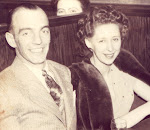
First cousins David Gustafson and Paula Stuart. Both of us were born in 1948, but Dave is 6 weeks older as I keep reminding him. We are on the swing in our Grandma and Grandpa Stuart's basement at 2019 Princeton Ave. in St. Paul, Minnesota. Grandpa kept his basement so clean you could eat off the floor.

Annual British Institute

The 9th Annual British Institute ----- Offering Irish and English Research The courses are taught by experts in their field of genealogy research.

The International Society for British Genealogy & Family History (ISBGFH) is sponsoring the ninth annual British Institute in Salt Lake City, October 5-9, 2009. The Institute will be held at the Crystal Inn, 230 West 500 South. Two courses will be taught by leading authorities: David Rencher,CG,AG,FUGA and Barbara Baker,AG .

The week-long courses titles are: Rencher Governmental Records of Ireland and Baker Finding Your English Ancestors.

Early registration fee before June 30 for either course is $415 for ISBGFH members, $435 for non-members. See the Web site for more information http://www.isbgfh.org/. The tuition includes individual consultations with instructors and on-site assistance in the Family History Library. All tuitions include the banquet to be held on Monday evening, October 5.

For registration and course description details, visit the website at www.isbgfh.org; or write to ISBGFH, P.O. Box 350459, Westminster, CO 80035-0459.

01 June 2009

USCIS Releases Alien Files to NARA

I just received this press release from the National Archives. Now I know what a friend at the USCIS has been working one. Thanks to everyone involved in this!

June 1, 2009

Signing Ceremony Permits Millions of Alien Files to Become Permanent Records at the National Archives

WHO: Adrienne Thomas, Acting Archivist of the United States; Gregory Smith, Associate Director, U.S. Citizenship and Immigration Services; Jennie Lew, Director of Communications, Save Our National Archives

WHAT: A joint signing ceremony between the National Archives and the U.S. Citizenship and Immigration Services at the National Archives will designate as permanent the immigration files created on the millions of aliens residing in the United States in 1944, as well as those arriving since then. These Alien Case Files (commonly referred to as A-Files) document the famous, the infamous, the anonymous and the well-known, and are an historical and genealogical goldmine. The new agreement authorizes the U.S. Citizenship and Immigration Services/Department of Homeland Security to send A-files to the National Archives when 100 years have passed since the birthdate of the subject of a file.

The National Archives expects to receive the first transfer of A-files later this year, and will store the files at National Archives facilities in San Francisco and Kansas City. Researchers will be able to access the files at these two sites, or request copies of files. An index will be available to support research use.

The A-files are a key to unlocking the fascinating stories of millions of people who traveled to the United States in search of opportunity. They include information such as photographs, personal correspondence, birth certificates, health records, interview transcripts, visas, applications and other information on all non-naturalized alien residents, both legal and illegal. The files are of particular interest to the Asian American community because many A-files supplement information in Chinese Exclusion Act era case files (1882-1943) that are already housed at the National Archives.

The signing ceremony is an important first step in the preservation of the approximately 32 million records that were originally scheduled for disposal. At the ceremony, the National Archives will have samples of the alien registration form that was used to create the A-files. The form requests detailed information revealing valuable material for researchers and family historians, such as the alien's current name, the name that he or she used when entering the ountry, marital status, occupation, name and address of employer, height, weight, and date and place of birth.

WHERE: Room 105, National Archives Building
700 Pennsylvania Avenue, NW, Washington, DC 20408
Please use the Pennsylvania Avenue entrance.

WHEN: 11:30 AM
Wednesday, June 3, 2009

29 May 2009

Genealogy Lessons Learned

The blog prompt from the world of Geneabloggers is "Week #21: Lessons learned. Fess up to your research mistakes so others can learn from them." Where do I begin? Seriously, I have done many things in genealogy the "correct" way. I had some excellent teachers early on in the dark ages of the 1980s. Did I listen to them all and do all that they recommended? Well, maybe not.

I am now someone who teaches other family historians through my writing, lecturing, and consulting. Do I always listen to my own advice. The honest truth? No. But, I mean well.

Here are a few of my lessons learned

1. Try to file paper away more frequently rather than let it pile up. The current view of my office stacks of paper is not for public viewing.

2. Do all years of city directories. I missed a couple years in the mid 1890s and years later kicked myself when I did check and found that several of the missing brothers of my great grandmother were listed at the same address as her.

3. I did not always copy the title page from a book when I made copies from the inner pages. That has led me back to libraries to get that info.

4. When you estimate the time needed at a courthouse or archive, double it. Or maybe triple it. I thought I was so smart I could get things accomplished faster that those who said that. I can't make the clerk retrieve a volume of records any faster than anyone else. Standing in line at a copier is slow for me, too.

5. I figured I had plenty of time to interview certain relatives. Turns out I did not. I have a cassette tape recorder and a digital recorder. Now it's too late for that older generation.

That's enough fessing up for one day.

"Small towns need to dust off websites"

Today's [Minneapolis] StarTribune.com carried an interesting column "Small Towns Need to Dust off Websites" by James Lileks. His comments about towns and websites hit home with me. I am sure that it will have great meaning for vacationers, genealogists, and others looking for information on a specific place. When I travel, I often look for a website of a place I am planning to work in or just stay the night in a motel. So often the info online is meager to say the least.

James is a unique writer -- I can just see him standing in his backyard or sitting at the dinner table when a column idea and the associated humor and commentary pop into his mind. His idea made me remember trying to find info online about the small towns where two of my adult children and their families were living.

A research trip to a new place always gets me planning. Is there a restaurant, park, any shopping, parking, and what does the place look like? Whether it is an outlying town or the county seat, I love to "see" what it looks like before my visit. James' emphasis on the history of the towns is right up my alley. Many libraries in these places in Minnesota and elsewhere have local history rooms that could provide much of the historical detail for such a website. A county history might have some neat details on the early history of the town.

James wrote "That's where the Minnesota Hamlet Website Project would come in. Sending unemployed Web designers around the state would be the modern equivalent of those WPA Guides the government used to sop up all the loose writing talent sitting around in the '30s. If they were put to good use, the idea went, they wouldn't sit around hungry and angry, writing rabble-rousing plays about woebegone Bolshevists. Send them around the country, the government decided, and have them do something nice and useful."

WPA [Work Projects Adminstation/Works Progress Administration] -- was he writing for me? Many of my readers know my passion for the records, abstracts, indexes, clippings, inventories, guides and other material created under the auspices of the WPA. The Historic Records Survey part created much that continues to assist family and town historians today. My lectures and articles on the WPA era are high on the list of requests.

I still believe that some sort of WPA system could help out-of-work Americans put food on the table for their family or pay the rent. Libraries and historical societies everywhere have less budget and staff to work with. Just think of all the tasks a WPA type worker could accomplish. Small town, county, and city websites would be wonderful projects also.

Anyone listening? Yes, the WPA and other parts of Franklin Delano Roosevelt's New Deal system was not perfect but it did produce a lot of good.

27 May 2009

Support your local genealogical society and one other

Have you given some thought to all those other genealogists who walk through the cemetery and transcribe the info found on the tombstones? How about those who edit genealogy newsletters and quarterly journals? Who teaches classes in the area where you live? I'll bet the local genealogical society plays a large part in all of these.

What can you do to lend a hand to a genealogical society? What projects does your society have in the works. Have you been reading a really good guidebook and might be able to write a short article about its usefulness? Do you belong to your local society? Your local society may be a county or state society one. At any rate, be sure to join it And then join one in an ancestral area. Contribute to both. Can't make it to that other locality? Offer to do some typing, indexing, proofreading. Have the back issues of the quarterly publication been indexed -- if not, offer to do that so both your and others may benefit.

What does all this connecting with genealogical societies do for you? You may gain access to special databases, learn about area experts, find an index to an ancestral cemetery, and maybe even find a place to donate some funds.

Becoming a member and reading the publications and perusing the website could help you expand your genealogical knowledge, find others to network with, learn about the massive number of recommended (and a few not-so-hot) genealogical guidebooks, keep up-to-date on vital records legislation, gain you entry to some libraries and courthouses, plan your continuing genealogical education, and find out that someone else was researching one of your ancestral lines.

It really is quite simple. Join a genealogical society. That’s it. If you are already a faithful member of one or more, join a new one. Some even accept online credit card payments for memberships.

Multiple benefits

How many do you belong to? None? Well, let me tell you what you are missing. Or are you a member of only those in ancestral areas and not where you live? Continue reading for some reasons why membership is beneficial.

• In some localities you need a membership card to gain entry to a historical society, archive, town hall, or courthouse.

• Info in the society’s library or publications may not appear anywhere online. Or if online maybe only accessed by members.

• Some have the capability for online discussions and queries – but only for members.

• Local society events are the place to find new acquaintances that might be willing to car pool to a seminar a distance away, to the state archives, or to a major genealogy library.

• If you don’t drive, you may find someone that travels monthly to research at a large library and has room in the car for you to tag along.

• You would miss newsletters and flyers that tell about upcoming educational events.

• The society’s publication may contain articles from the local experts that share news about the updating of the newspaper index at the local library, of the volunteer efforts to transcribe all the local cemetery tombstones for an upcoming publication, or of the recent donation to the local history room of the 50 years of material collected by a local genealogist.

• Lending of lecture audiotapes, books, and periodicals may be for members only.

• You might find a fellow member that might lend you their entire bookshelf of back issues of a genealogical or historical society publication.

• Stuck on a genealogical software problem? A fellow member might be available to teach you the finer points of that software.

Old Queries
The publications of societies are often a gold mine. Even the queries published ten, thirty, or 60 years ago may help solve one of your genealogical situations. That person may no longer be interested in genealogy (although, I cannot fathom that!), may have died, may be ill, not have a computer, or for some other reason has not posted family information or queries online. This older periodical may be the only place you find some long sought after clues. (If your research shows that this long-time genealogist is deceased you may be able to find current relatives through an obituary or probate file.)

Take the step
Are you ready to consider joining or rejoining if it has been a while? Check for brochures at your area historical and genealogical libraries, and check online for names of societies at Society Hall , which is a joint effort of Ancestry.com and the Federation of Genealogical Societies.

Check out their websites
One way to find out more is to see if the society has a website. Society Hall is one place to find links. You might also try typing in the name of a society in a search engine or simply type in some key words such as: genealogical society Smithtown.

Please
While you are joining, please consider some volunteer time for the society. It can be in your local area as an on-site volunteer. If you live distant from one of your favorite societies maybe you could offer other services as mentioned above. They may need someone to do data entry of their old typewritten cemetery transcriptions, to write articles, or index a newspaper that is on microfilm. Participate further by donating genealogical books, CDs, and periodicals you no longer need. If the society has a library, your materials may be needed in their library. If they are duplicates of what is already in the library, or the society has no library, selling the donated materials helps with the society budget. Thirdly, why not add a society or two to your list of charitable organizations to which you donate funds? Almost all societies have very limited budget and would appreciate some extra funds for helping to share information and education.

21 May 2009

82 years ago today -- Charles Lindbergh crossed the Atlantic. Today's news is not so good.

82 years ago. This is the anniversary of the day Minnesota's own Charles A. Lindbergh became the first person to fly solo across the Atlantic Ocean. May 21, 1927 was the date he flew the "Spirit of St. Louis" from New York to Paris. It's easy to learn more about the man and his flight on a variety of websites. Type in his name or the plane's name into your favorite search engine and plan on a lot of interesting reading.

His childhood home and a visitors center are a historic site run by the Minnesota Historical Society (MHS). The home has original family furnishings.

That's the good news. The bad news is that the current economic situation may be forcing the Minnesota Historical Society to close the historic site of "Lindy's" childhood home in Little Falls, Minnesota.

MHS like so many other historical organizations, archives, museums, and libraries is in the midst of humongous funding and budget cutbacks. It's similar to what is happening with households, businesses, governments, and other organizations today. Staff, public hours, collecting and processing artifacts and manuscripts, cataloging, publishing, and other services are being cut dramatically. The Lindbergh site is on a preliminary list of places MHS maybe forced to close. Legislatures and governors across the U.S. are still in the throes of budget talks and not all value history. Our history both locally, statewide, and nationally is in dire straits.

Our historical memory is threatened at so many levels. Those involved in preserving history are constantly being put out of work, historical society staff trips around a state to pick up records in need of preservation and proper storage are being canceled, families are selling off beloved heirlooms in order to put food on the table, travel to research our family histories has been put on the back shelf, research and museum hours at repositories have been slashed dramatically and some have been closed entirely.

The immediate future is not looking up. Don't forget to let your legislators at the state and federal level know that history is fading away and if it is not saved, preserved properly, or kept within reach, it may not be retrievable.


20 May 2009

Six weeks now left to save $50.00 on the FGS Conference price

We have just six weeks left to save $50.00 on the FGS/AGS Genealogy Conference!

Save $50.00. Sounds like a deal. The Federation of Genealogical Societies and Arkansas Genealogical Society invite you to four full days of genealogical education (and fun) surrounded by fellow genealogists, historians, librarians, archivists, editors, authors, and others who speak genealogy. Beautiful Little Rock, Arkansas is the site of the 2009 Conference “Passages through Time.”

How do you save $50.00? Register by July 1, 2009 and save $50.00 off the full conference registration cost. That is a significant savings, but to take advantage of this make your online reservation before the end of July 1st or make sure your regular mail registration is postmarked on or before July 1st. Of course, you may register after that, but saving $50.00 is mighty tempting.

• View the extensive conference program at www.FGSConference.org. It features many well-known specialists in genealogy, history, archives, and libraries along with lots of new faces and many lectures you have never heard before. There is something for every level of family historian. Learn about techniques, databases, libraries, archives, and maps that will help your search. Several tracks on Wednesday are geared toward those involved in running genealogical societies. Librarians and professional genealogists will find lectures dedicated to them.

• Use that $50.00 savings in the Exhibit Hall where you’ll find row after row of genealogical vendors, societies, software, memberships, magazines, databases, newsletters, books, maps . . .

• Check the conference blog (a online newsletter) for conference and locality news, updates, hotels, local transportation, expanded vendor, speaker and lecture info, advertising opportunities for businesses, individuals and societies, special events, FAQs and so much more. www.FGSConferenceBlog.org

• The FGS Conference has gone green. Watch the blog for details.

• Join your fellow genealogists for a night at the ballpark complete with a baseball game, lots of food, and door prizes. The Arkansas Travelers team is a Texas League AA affiliate of the Los Angeles Angels of Anaheim.

• Arrive on Tuesday, September 1st, pick up your registration packet anytime after 2:00 and join us for a free Ice Cream Social from 3:00-5:00 for registrants only. A couple of workshops that day make it a 4.25 day conference!

18 May 2009

Louisiana Slave Records, 1719-1820

One of the blogs I regularly read is the "Ancestry Insider" which is written by "a person" who is currently a FamilySearch employee and formerly worked for Ancestry.com. The Insider continues to cover both FamilySearch and Ancestry.com. The writing is entertaining educational, and truthful. Successes, problems, neat features, corrections, and future plans for both sites are talked about.

A posting today discusses Ancestry.com’s version of the “Afro-Louisiana History and Genealogy, 1719-1820” database, which Ancestry lists as “Louisiana Slave Records, 1719-1820.”

"In 1984, a professor at Rutgers University stumbled upon a trove of historic data in a courthouse in Pointe Coupee Parish, Louisiana. Over the next 15 years, Dr. Gwendolyn Midlo Hall, a noted New Orleans writer and historian, painstakingly uncovered the background of 100,000 slaves who were brought to Louisiana in the 18th and 19th centuries making fortunes for their owners.

Poring through documents from all over Louisiana, as well as archives in France, Spain and Texas, Dr. Hall designed and created a database into which she recorded and calculated the information she obtained from these documents about African slave names, genders, ages, occupations, illnesses, family relationships, ethnicity, places of origin, prices paid by slave owners, and slaves' testimony and emancipations. . . ."

Check out the Ancestry Insider for the rest of the discussion and some previous problems with it on Ancestry.com, changes made by Ancestry, and comments from Dr. Hall herself. The Insider will have a later post reviewing the current Ancestry.com version of Dr. Hall's compilation.

17 May 2009

David E. Rencher named Chief Genealogical Officer of FamilySearch

I can say I knew him when! A long-time friend, David E. Rencher, AG, CG, FUGA, FIGRS, has been named the Chief Genealogical Officer of FamilySearch. David is well-known in genealogy circles worldwide, yet he remains "one of us."

David is a former President of the Federation of Genealogical Societies and is a dear friend to many in the genealogy world. It was nice to be able to congratulate him in person at the NGS Conference in Raleigh last week.

David will coordinate FamilySearch's activities and presence in the genealogy community and will act as a liaison to key industry communities and associations worldwide. He will also explore third-party affiliation opportunities and related marketing initiatives for FamilySearch.

Rencher is both an Accredited Genealogist and a Certified Genealogist. He holds a BA in Family and Local History from Brigham Young University. He served as president of the Federation of Genealogical Societies (FGS) from 1997 to 2000 and the Utah Genealogical Association (UGA) from 1993 to 1995. He is a Fellow of the UGA and the Irish Genealogical Research Society, London. David is a former Director of the Family History Library. He is currently serving as the chair of the joint Federation of Genealogical Societies and National Genealogical Society committee for Record Preservation and Access and serves as a director for the National Institute of Genealogical Research Alumni Association (NIGRAA). He will continue to serve as the vice president of the Genealogical Society of Utah (GSU) and the director of the Planning and Coordination Division of FamilySearch.

Many genealogists appreciate his involvement to ensure that patrons of family history centers had more timely delivery of microfilm, and he has extended microfilm circulation to public libraries. He initiated the book-scanning program for the Family History Library collection, and helped produce the automated indexes for the Social Security Death records, the 1880 U.S. Census, the 1881 British Census, and the military casualty files for Korea and Vietnam.

As if all this isn't enough, David's conference presentations are excellent. He is one of the speakers at the September 2009 Federation of Genealogical Society's Genealogy Conference.